Arabic Letters Are Shapeshifters. The Internet Has Been Losing for 500 Years.
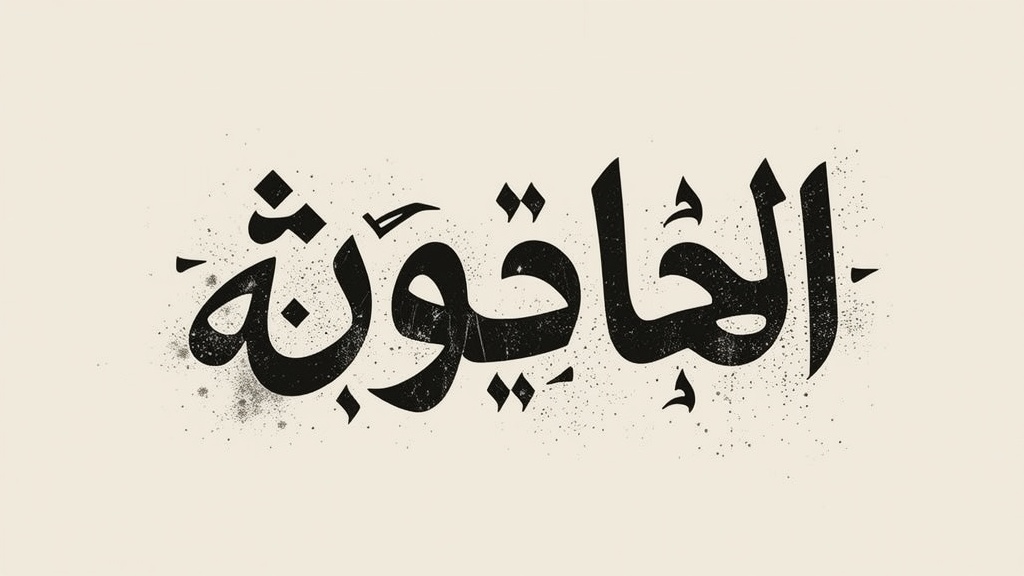
Here's a fact that will rearrange your brain: Arabic letters change shape depending on where they sit in a word. Not a style choice. A grammatical requirement. The same letter looks four different ways: alone, at the start, in the middle, at the end. Miss a connection and you don't have "ugly text." You have nonsense. The word stops working entirely.
If you love language, this stuff is endlessly fascinating. If you work with language on computers, it's also a 500-year-old puzzle with new ways to fail every decade.
Letters That Refuse to Stand Alone
Javanese has the same joining requirement. About 100 million people read it. Drop the connecting ligatures and you don't get bad Javanese. You get a pile of disconnected shapes with no meaning at all. For scripts like these, the connections aren't decoration. They're structure. They're the difference between a word and a word salad.
A receipt printer once demonstrated this perfectly. A PDF library on the server pre-dated the existence of a shaping engine in its language runtime. The engine that knew how to join Arabic letters simply wasn't there yet. So every Arabic letter sat alone, isolated, like Scrabble tiles dumped face-up on the table instead of played into the board. Same letters. No words. Completely useless.
Reading Right to Left, Ragged on the Left
Arabic flows from the right margin. Which means when you see a block of Arabic text, the ragged edge (the side where line lengths vary) falls on the left. For people used to English, this is a small mind-bender. For typographers and web developers, it's a detail that breaks layouts in specific and embarrassing ways when you forget it.
Arabic printers have been solving this problem in physical type for centuries. Web browsers caught up around 1995 and then kept finding new ways to break it anyway.
The 12,000 Invisible Names
In 2017, a data import encoded 12,000 names using fossil Unicode codepoints from 1991 instead of standard codepoints from 1995. To your eye, the two encodings look completely identical. To a search index, they are different strings. Those 12,000 names became effectively invisible to search. Not misspelled. Not corrupted. Just speaking a dialect the index didn't recognize.
Unicode began as a good idea and got very complicated very fast. If your data pipeline doesn't know that the 1991 and 1995 versions encode some characters differently, your search engine won't either. It will find everything except exactly what you're looking for.
The Digits That Went the Wrong Direction
Arabic-Indic digits (the ones that actually look different from 0-9) are part of proper Arabic typography. You'd think Arabic-speaking computer users would use them. But software products were never fully localized. The words appeared in Arabic. The numbers didn't. Generations of Arabic computer users grew up reading mixed-script interfaces, and Western 0-9 numerals stuck.
The World Digital Library built its own custom formatting functions to handle Arabic-Indic digits and extended variants because it had to. The JavaScript Intl API, which handles locale-aware number formatting, didn't exist yet during the project's early years. So they wrote the floor themselves.
$750,000 Worth of Free Fonts
The academic publisher Brill spent $750,000 creating fonts specifically for Semitic philology. Characters for ancient languages, specialized scripts, the full toolkit for working with texts that predate digital type by millennia. Then they released the fonts for free.
That's one of the more quietly extraordinary things anyone has done for linguistics. If you've ever wondered why decent fonts exist for Syriac or Hebrew vowel points or any number of scripts that barely register in mainstream software, now you know someone wrote a very large check.
The Style That Never Made It Online
Maghribi is the distinctive Quranic lettering style from Morocco and North Africa. Visually striking. Historically important. No known implementations exist for online rendering as of this writing.
Half a billion Arabic readers, and this particular visual tradition just hasn't made it to the screen. The history of Arabic typography on the web spans roughly 500 years of accumulated decisions, technical accidents, and encoding mishaps, and it's still incomplete.
Why Any of This Matters to a Word Person
If you think English spelling is chaotic (and it is), Arabic typography adds a whole dimension: letters that transform, a script that solved right-to-left layout centuries before web standards existed, numerals that split from their own writing system for software reasons, and a 500-year archive of type design that the internet is still catching up to.
The puzzle isn't just words. It's the shapes words take, the systems that carry them, and the tiny encoding decision from 1991 that hid 12,000 names from a search engine for years. Language is always doing something more interesting than you thought. Sometimes the most fascinating part is just figuring out why the letters won't connect.
Source: Languagehat