How \"One Rice\" Accidentally Became \"God Is Gracious\"
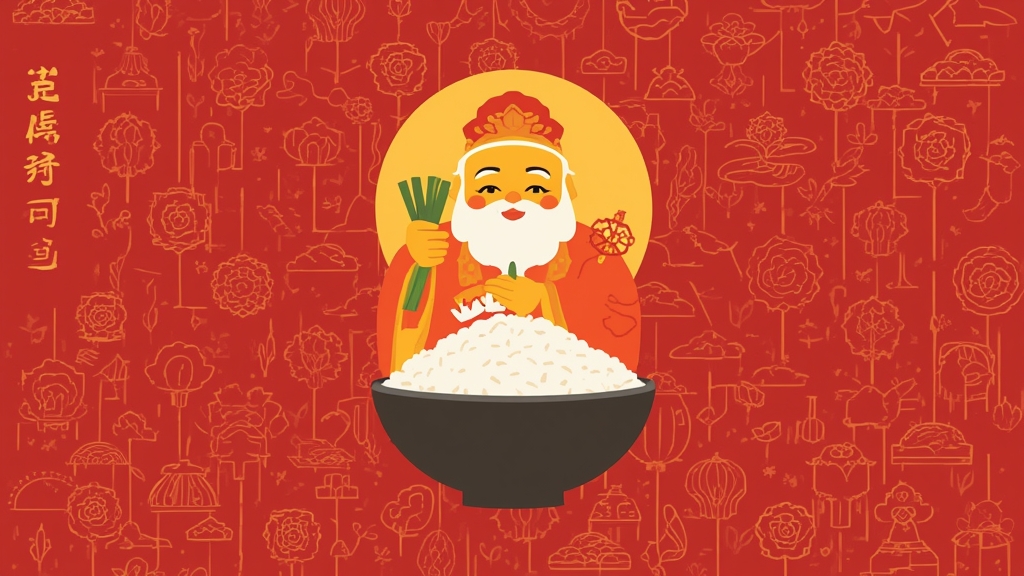
Some names carry centuries of meaning. Some names are family traditions. And some names are pure accident — the kind that makes a linguist spill their coffee. Meet Ivan. His name means "God is gracious." It also means "one bowl of rice." Both are true, and neither translation knows the other exists.
The Nickname That Crossed Three Languages
Sylvain Farrel is a student nurse from Indonesia, fourth generation Indonesian Chinese, who came to America four years ago. His family speaks Bahasa Indonesia. He cannot speak or write Chinese. But somewhere in the family history, a Chinese name survived as sound: yīfàn (一飯), meaning "one rice" or "one meal."
In everyday life, that got shortened. Phonetically massaged. And out came: Ivan.
Now here's where it gets good. Ivan is emphatically not a Chinese name. It's one of the most recognizably Slavic names on the planet — Russian, Ukrainian, Serbian, Bulgarian, Croatian, Macedonian, Belarusian, Montenegrin. Written Иван in Bulgarian, Russian, Serbian. Written Іван in Ukrainian and Belarusian. Written Їѡан in Old Church Slavonic. Showing up in Romance-speaking countries since the 20th century.
Ivan the name traces back to Greek Iōánnēs, which traces back to Hebrew יוֹחָנָן (Yôḥānnān). The meaning? "God is gracious."
One rice. God is gracious. Same four letters. Zero shared history.
What Word Games Teach You About This
If you play Scrabble, Wordle, or any word game long enough, you start noticing homophones and near-homophones everywhere. Words that sound alike and mean completely different things. Flour and flower. Knot and not. Knight and night.
What Sylvain's story illustrates is that this phenomenon doesn't stop at the edge of one language. It scales globally. A syllable that means "one meal" in Mandarin can land, by pure phonetic coincidence, in the middle of a 2,000-year etymological chain running through Hebrew and Greek.
Language is doing this constantly. You just rarely get to see the collision documented so clearly.
The History That Made the Name Necessary
There's a darker layer here. In the late 1990s, Indonesia experienced severe anti-Chinese racial riots. In the aftermath, many Indonesian Chinese families ditched their Chinese names entirely and stopped speaking Chinese. The pressure to assimilate was not abstract.
Sylvain is ethnically Chinese, Hokkien/Fujian on one side and likely Hakka on the other. His family members each carry different surnames, assigned by his father. The Chinese language didn't survive into his generation. But yīfàn survived as sound, as nickname, as the letters I-V-A-N.
Names are compressed history. Sometimes the compression is so tight that the original meaning disappears completely, leaving only phonetic residue. Ivan doesn't know he's carrying "one rice." Nobody in his daily life knows either. This could mean the nickname was always just casual, affectionate shorthand. One possibility is that his family never thought much about the etymology at all. It sounded right. It stuck.
The Etymology Chain Worth Memorizing
Here it is laid out, because this is genuinely beautiful:
Hebrew Yôḥānnān ("God is gracious") became Greek Iōánnēs. That became Old Church Slavonic Їѡан. That became Ivan across a dozen Slavic languages. Common patronymics that branched off include Ivanović (Serbian/Croatian), Ivanov (Russian/Bulgarian), and Ivanovich (Russian).
And separately, in a completely different part of the world, a Chinese name yīfàn (一飯) got casually shortened in an Indonesian Chinese family to something that sounds like Ivan.
Two completely independent paths. Same four-letter destination.
Why Word People Love This Story
If you've ever gone deep on Wordle strategy, you know that certain letter combinations appear across languages in ways that feel uncanny. ADIEU burns through vowels because it does that job in English. But ADIEU is also an actual French word. The same cluster of letters sits inside two different systems, doing different work.
Sylvain's name is a live example of this happening in real human lives, across real history. He studied English in elementary and middle school back in Indonesia. He came to America four years ago. His national language is Bahasa Indonesia. His family survived one of the worst periods of anti-Chinese persecution in Southeast Asian history.
And his nickname accidentally means "God is gracious" in a language his family has no connection to whatsoever.
Language doesn't care about your intentions. It just does what it does.
If that doesn't make you love words a little more, nothing will.
Source: Languagelog