Nobody Can Agree on the World's Most Spoken Languages
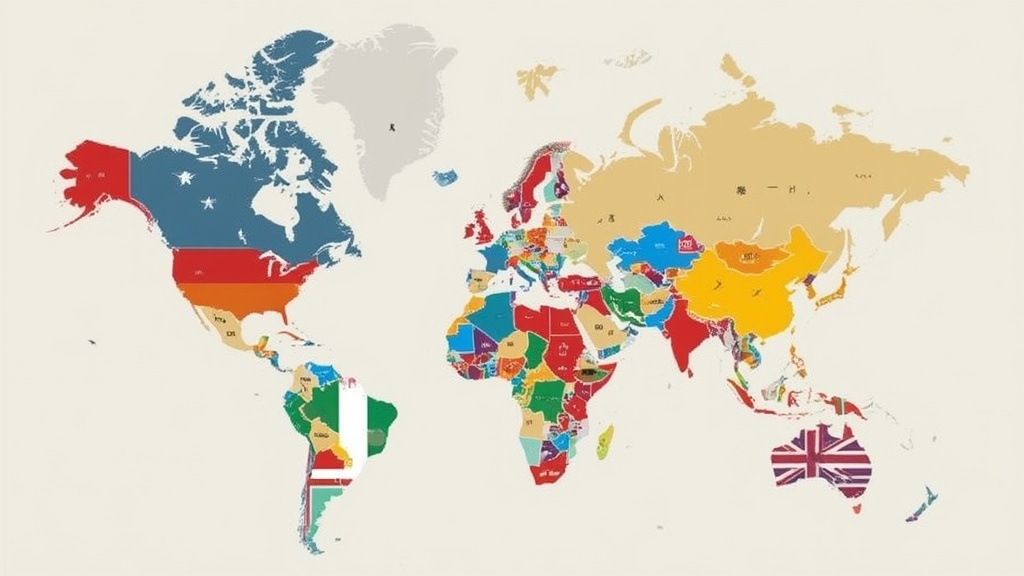
Word games have rules. Language rankings, it turns out, do not. Ask the CIA and Ethnologue which languages crack the global top 10, and you'll get two completely different answers. Both are using real data. Both are confident. Both are, in their own way, correct. Welcome to the most contested list in linguistics.
The Arabic Paradox
Modern Standard Arabic has zero native speakers. Read that again.
The Arabic that appears on official lists, the Arabic recognized by the United Nations, the Arabic you'd find in a formal dictionary: nobody grows up speaking it at home. It's a prestige dialect learned formally in school, not acquired naturally from parents. The language you'd use to write a newspaper is not the language anyone uses to argue with their family.
Egyptian Arabic is what people actually speak. And if you counted Egyptian Arabic as its own language, which many linguists argue is entirely reasonable, it would rank inside the top 10 most spoken languages on earth. Most rankings lump all Arabic varieties together under one flag, which inflates the count while obscuring what's really happening.
This is the Arabic paradox: one of the UN's six official languages has no L1 speakers at all.
The Indonesian Surprise
Here's a pop quiz. Name a language with 252 million total speakers. Stumped? You're not alone.
Bahasa Indonesia has 252 million total speakers according to Wikipedia. Indonesia's own census data puts it higher: 97% of the country's roughly 272 million people speak the language. Ethnologue's 2026 rankings place Bahasa Indonesia higher than Russian.
Russian, for comparison, has 210 million total speakers.
And yet: the CIA's top 10 language list puts Russian at number 9. Indonesian doesn't appear at all.
Same planet. Largely the same data. Wildly different results. The explanation comes down to methodology. Count only native (L1) speakers and Russian looks stronger. Count total speakers and Indonesia's enormous population changes the math. Ethnologue and the CIA weight their inputs differently. Neither is wrong, exactly.
There's one more wrinkle. Standard Malay and Standard Indonesian are close enough that some linguists treat them as a single language. Combined, that language family would rank fifth on the Ethnologue list. That's a linguistic bloc bigger than most people ever think about.
The UN's Official Club of Six
The United Nations recognizes six official languages: Arabic, Chinese, English, French, Russian, and Spanish. These are the languages of resolutions, treaties, and formal correspondence.
The unofficial list is growing. The UN has started adding Portuguese, Hindi, Urdu, and Swahili to portions of its website. Not full official status, but a quiet acknowledgment that the original six leave out a significant chunk of the world's speakers.
One possibility is that the official six reflect the political realities of 1945 more than any honest accounting of where the world's speakers actually are. Language politics, like word game rankings, depends a lot on who's keeping score.
Why Any of This Matters for Word Nerds
If you play word games in English, you're operating in the most documented, most resource-rich word game ecosystem on earth. But if you're curious about branching out, the actual speaker counts matter.
Indonesian-language word games have somewhere north of 252 million potential opponents. The Malay-Indonesian language family, if you count it together, would give you the fifth-largest pool of players on the planet. Arabic word games have to navigate the gap between written MSA and the dozen-plus spoken dialects that people actually use.
Language is messier than any ranked list suggests. Which, honestly, is what makes it such good material to play with.
Source: Languagehat