The 4,000-Year-Old Puzzle That Cracked Open With a Repeated Syllable
You know that moment in Wordle when one yellow tile suddenly unlocks everything? A French archaeologist just had that moment. Except his puzzle was 4,000 years old and had been stumping scholars since 1903.
77 Signs Nobody Could Read
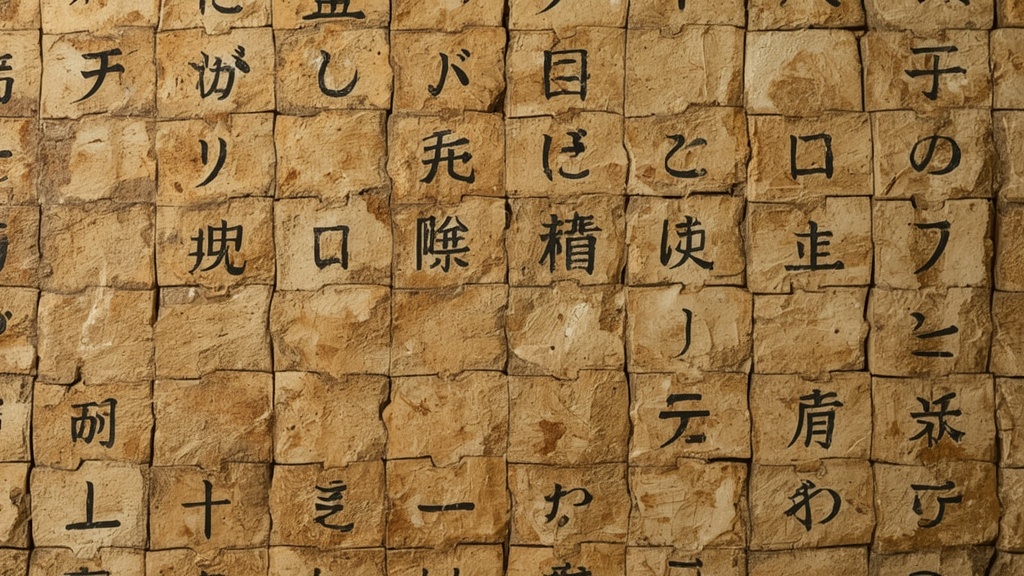
Linear Elamite is a writing system from ancient Elam, a Bronze Age civilization from what is now Iran. It uses 77 signs: diamonds, curves, and other geometric patterns carved into stone and clay. Archaeologists found it at the site of Susa in 1903. Then spent the next 120 years staring at it.
François Desset, a 43-year-old French archaeologist at the University of Liege in Belgium, first ran into Linear Elamite during excavations in southern Iran in 2006. He didn't crack it then. The script sat untranslated. He kept looking anyway.
Ten New Texts Changed Everything
The foothold came through the Mahboubian collection, a set of ancient artifacts held in London by a family of Iranians living in exile. The collection gave Desset access to ten new inscriptions nobody had studied closely. New texts mean new patterns. New patterns mean new chances to spot the thing that breaks a code open.
Here's what every cryptographer knows: proper names are golden. Places, gods, rulers. They don't translate. They don't bend. The name of a king in 1950 BC is still the name of a king today.
The Name That Did It
Look at this name: Shilhaha. Say it out loud. Shil-HA-HA. Notice the ending? The last two syllables repeat.
Desset found a ruler named Shilhaha, who reigned around 1950 BC, inscribed in the Linear Elamite texts. In a sequence of four symbols, the last two were identical. A pattern. The same kind of pattern you notice when a crossword grid suddenly makes sense, when the doubled letters line up, when the answer clicks into place.
That repeated pair was the foothold. From there, Desset worked outward, matching symbols to the names of places, gods, and more rulers. The 77 signs started speaking.
This Trick Has a History
Desset is not the first person to crack a dead language through a ruler's name. Jean-François Champollion deciphered ancient Egyptian hieroglyphs at the start of the 19th century using the exact same move: the names of rulers Ptolemy and Cleopatra. Names hold their shape across millennia. They're the anchor point everything else hooks onto.
Same playbook, different puzzle. Two scripts. Two archaeologists. One method: find the name that doesn't change, then pull the thread.
45 Inscriptions and Counting
Since the Shilhaha breakthrough, Desset has worked through 45 inscriptions. A writing system used by an entire Bronze Age civilization sat unread for over a century after its rediscovery. Now it's talking.
That's the thing about truly hard puzzles. The solution is often elegant. A four-symbol sequence with two identical signs at the end. One repeated syllable. One person who noticed.
You would have spotted it too. Probably.
Source: Languagelog