The Founding Father Who Hated English Spelling as Much as You Do
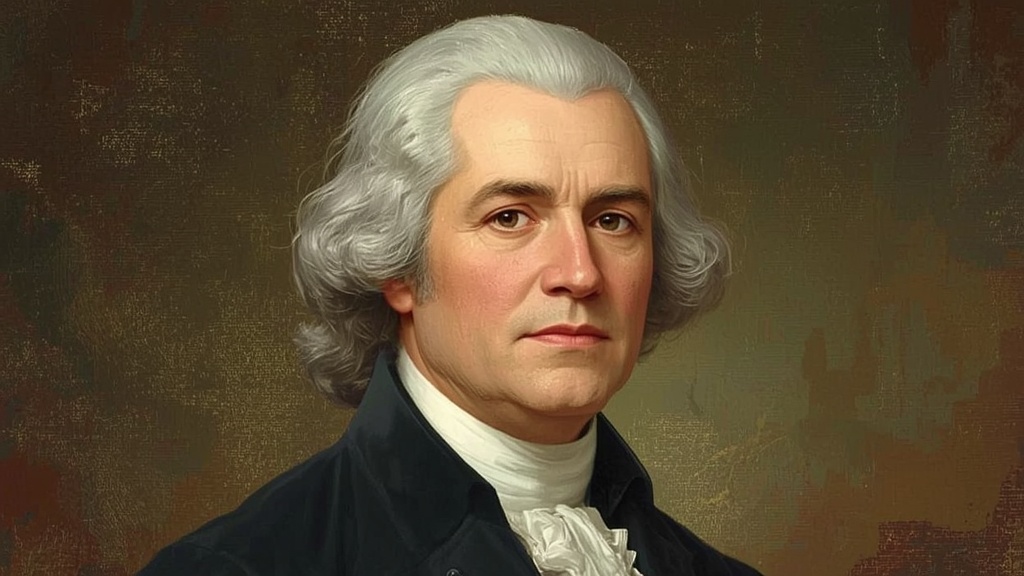
English spelling is a mess and everyone knows it. "Knight" has a silent K, a silent GH, and somehow rhymes with "bite." "Colonel" sounds like "kernel." "Enough" rhymes with "stuff." If you've ever lost a Wordle because your brain autocorrected to the wrong vowel pattern, you have a kindred spirit in Benjamin Franklin, who got so fed up he tried to burn the whole system down.
The Reformed Mode of Spelling
In 1768, Franklin had a plan. He called it the Reformed Mode of Spelling (RMS), and the concept was simple: build a proto-phonemic alphabet and write words the way they actually sound. Ditch the letters that exist purely to confuse. He refined and published it in 1779.
The American Philosophical Society, which Franklin himself founded in 1743, still holds the original manuscripts in Philadelphia. The vowel and consonant table he built from scratch. The actual papers where he mapped out what English could look like if it had rules worth following. Those documents were donated to the Society by the family of a woman named Polly Stevenson.
The Missing Letter
Franklin sent Polly Stevenson a letter dated July 20th. In it, he asked for her help with the RMS. She was his collaborator, his sounding board, the person he trusted to tell him whether the thing actually worked.
That letter sat lost for centuries. It had never been studied from a linguistic perspective until researcher Gary D. German came along for his open-access work "Benjamin Franklin: Orthoepist and Phonetician." Polly's papers survive in the Islandora collection, which is also where the original vowel and consonant table manuscript lives.
This wasn't a casual side project. The manuscript, the missing letter, the vowel table: Franklin was serious about this. He just needed someone to help him figure out the hardest part.
Whose Accent Counts?
Here's where it gets genuinely interesting. If you're building a phonemic alphabet, you have to pick a pronunciation to base it on. Whose do you use?
Franklin was born in Boston. He later picked up a Philadelphia influence. But the prestige accent of the era was London English, the speech of educated colonial elites who wanted to sound properly British.
German's second volume, "Colonial American Voices and London Norms: Franklin's Quest for an Orthographic Reform," digs into exactly this question. Was Franklin encoding his own colonial American vowels? Or was he chasing London norms to give his system legitimacy? Vaughan's 1779 edition of the RMS, which appears in Chapter 5 of a collection of Franklin's writings, is part of what makes this question so hard to answer.
One possibility: a spelling system trying to please two different accents ends up perfectly representing neither. That tension could be exactly why the reform never stuck.
Why This Matters to Word Gamers
Franklin's RMS failed. English kept its silent letters, its "ough" problem, its inexplicable gaps between sound and spelling. But the question he was asking is one you bump into every time you play Scrabble, Wordle, or any game where spelling and sound don't quite line up.
Why does English look so little like it sounds? Franklin had a 1768 answer sitting in a vowel table at the American Philosophical Society. Nobody studied it linguistically for centuries.
He wasn't wrong about the problem. He just lost the argument. You're still dealing with the fallout every time you second-guess a double letter.
Source: Languagehat