The Language That Got Banned in Class (And How AI Is Bringing It Back)
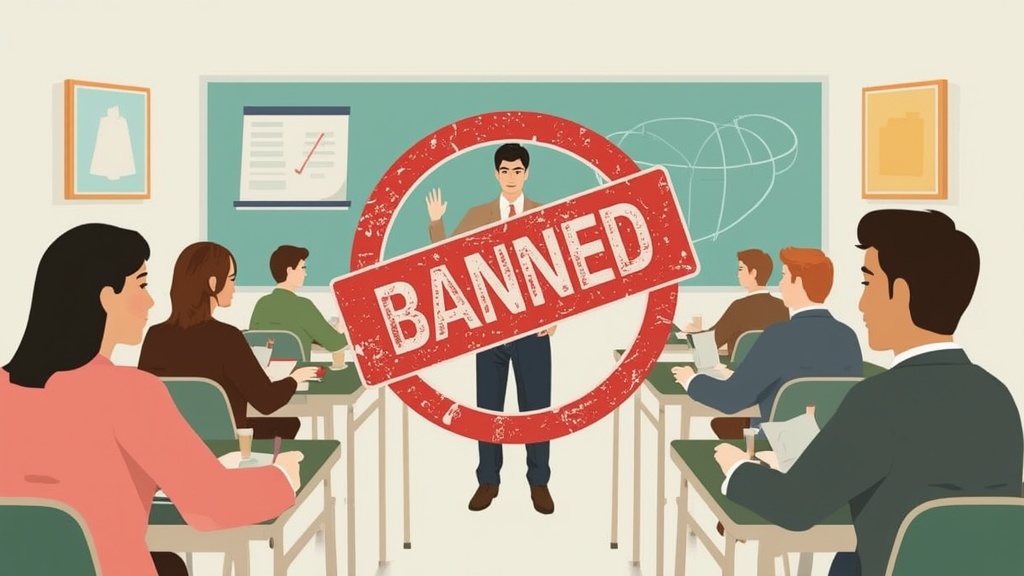
Some languages disappear quietly. Louisiana French did not go quietly. It got the knuckles-on-the-desk treatment, literally.
A Language That Owned the Room
For centuries, Louisiana French was the language of South Louisiana. Not a dialect tucked into mountain hollows or fishing villages. The language. Predominant, everyday, unremarkable to the people who spoke it.
Then 1921 happened.
The Year Someone Put English in Writing
When Louisiana rewrote its state constitution in 1921, English became the official primary language. That document didn't just change what was taught in schools. It changed what parents thought was safe to teach at home.
Parents who had grown up speaking Louisiana French started keeping it from their children. Fear of discrimination was real. The classroom made it concrete: students who spoke Louisiana French in class got their knuckles rapped. Imagine learning that your first language is something to be punished out of you one sharp crack at a time.
The language didn't vanish overnight. But it started shrinking.
Dewey Balfa and the Sound of Something Surviving
While the language was being rapped out of classrooms, a fiddler named Dewey Balfa was keeping something alive. He was a celebrated fiddler and singer credited with popularizing Cajun music, which carried Louisiana French in its lyrics, its feel, its whole texture.
Music is a sneaky preserver. Words that people were too scared to speak in schools lived on in song. This is one of the great linguistic survival tricks: wrap the language in melody and it travels places the rulebook can't follow.
1968: Someone Finally Organized
In 1968, the Council for the Development of French in Louisiana was created to push back through education and community initiatives. After decades of suppression, there was finally an organized effort to say: this language is worth keeping.
By 2023, the Advocate of Baton Rouge estimated about 120,000 Louisianans still spoke French. That number sounds substantial until you picture what it was before 1921. A whole world of speakers, compressed into a fraction of what it could have been.
Now AI Is Listening to the Old Nursery Rhymes
Here is where it gets genuinely fascinating for anyone who loves what language actually does.
Prof. Joshua Caffery, director of the Center for Louisiana Studies at the University of Louisiana at Lafayette, assembled a team to tackle a specific technical problem: Louisiana French is hard for machines to understand. Standard French speech recognition doesn't handle it well. The vocabulary drifted. The pronunciation evolved separately. The language did its own thing for centuries while Parisian French went one direction and Louisiana French went another.
Caffery's team trained an automatic speech recognition model specifically for Louisiana French, using historical artifacts, interviews, and old French nursery rhymes. Not just documents. Nursery rhymes. The little songs that parents used to sing to children before 1921 made it too frightening to do so.
Christine Mallinson, a professor of language, literacy, and culture at the University of Maryland, Baltimore County, works in exactly this space where linguistics meets technology meets cultural survival. It's a puzzle that doesn't have a clean solution but is absolutely worth attempting.
What Training on Nursery Rhymes Actually Means
Speech recognition for an endangered language sounds like a dry technical achievement. What it actually means: someone can record an elderly Louisiana French speaker, run it through the model, and get a transcript. Recordings become searchable. Words become preservable. A language that got rapped out of schoolrooms gets a second chance.
The nursery rhyme training data is a quietly brilliant solution. Formal documents exist for most languages. What formal documents miss is the living texture: the diminutives, the casual speech, the words parents whisper to children at bedtime. You need the nursery rhymes to capture how a language actually breathes.
Louisiana French went from spoken everywhere to spoken by 120,000 people in about a century. Whether AI tools can help stabilize what remains is an open question. But the puzzle is being worked on by people who love what they're trying to save.
You probably know how that feels.
Source: Languagehat