Thomas Jefferson Invented Your Financial News Headline
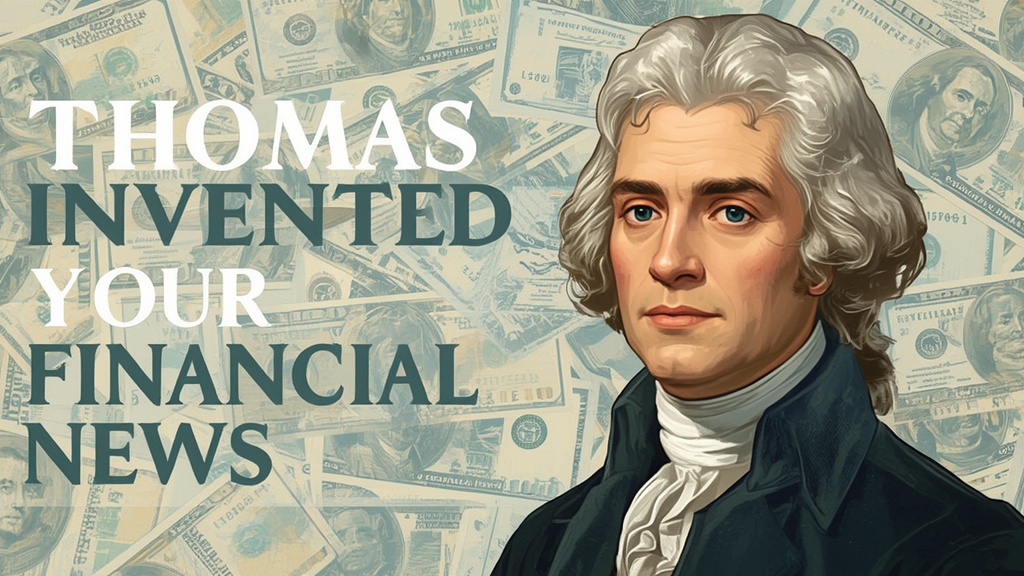
The Nasdaq 100 just gained $3.5 trillion in four days. Bloomberg's headline called it a "melt-up." Your financial news anchor said "melt-up." Half of Twitter said "melt-up."
Thomas Jefferson said it first. In 1786.
Wait, What Even Is a Melt-Up?
Wiktionary defines it simply: a price that increases "to an unexpected degree." The opposite of a meltdown. Obvious in retrospect, but nobody was using it until suddenly everyone was.
The financial press picked it up around 2014, when MarketWatch used it to describe the 2013 bull market. Since then it's become standard Wall Street vocabulary, the kind of term that gets dropped in Bloomberg headlines without explanation because you're just supposed to know it by now.
The Bloomberg headline in question: Tech Melt-Up Drives $3.5T Nasdaq 100 Gain in Four Days, published August 5, 2026. That 9.3% jump was the sharpest four-day rally since April 2025. Big numbers. Flashy headline. Modern financial jargon all over it.
Except it isn't modern at all.
The Part Where Language Gets Weird
Mark Liberman at Language Log dug into this on August 6, 2026, and the results are genuinely strange. "Melt up" as a phrase predates Wall Street, predates the Federal Reserve, predates the United States as a functioning country.
Thomas Jefferson used it in 1786. Mark Twain used the construction "melted it up" in 1872.
The phrase sat mostly dormant for over a century. Financial writers rediscovered it in the 2010s and assumed they were being clever. They were recycling a Founding Father.
Why This Is a Word Person's Kind of Story
Language doesn't move in straight lines. Words appear, disappear, resurface wearing different clothes in different contexts. "Melt up" spent roughly 130 years between Jefferson and modern finance doing essentially nothing, then suddenly it's all over your news feed.
This happens more than you'd think. Words go underground. They sit in diaries, letters, novels, waiting. Then the right moment arrives and someone reaches for a phrase that feels fresh, not knowing Jefferson reached for the same one first.
One possibility is that "melt" as a verb just has the right texture for unexpected transformation. Ice melts. Metals melt. You can melt down (disaster) or melt up (something harder to name, rarer, almost magical). The word does the work that "surge" and "spike" don't quite do.
What to Do With This Information
Nothing, technically. You don't need to know that Jefferson used "melt up" to play Scrabble or solve Wordle. But if you're the kind of person who reads about word origins for the pure pleasure of it, this is your kind of story.
Financial jargon sounds cutting-edge by design. It's supposed to signal insider knowledge, real-time relevance, modernity. Then a linguist looks at it and finds Thomas Jefferson.
Words are older than they look. That's the whole game.
Source: Languagelog