Five Ancient Scripts Nobody Has Cracked (And Why That's Harder Than It Sounds)
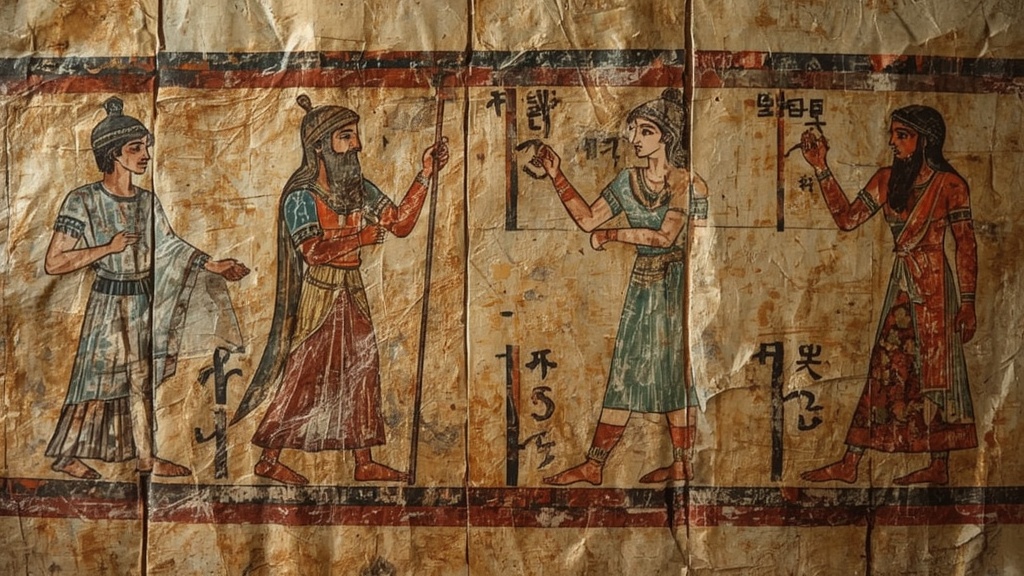
You've solved cryptograms. You've cracked Wordle in three guesses. Maybe you've even decoded a Caesar cipher just because you could. But there's a puzzle that has defeated every linguist, cryptographer, and obsessive scholar who ever tried: five writing systems from the ancient world that nobody can read. Not one word.
The Five That Remain Locked
Crystal Ponti catalogued them in a May 2026 article in History, and Victor Mair at Language Log followed up with analysis eight days later. The five undeciphered scripts are Linear A, Indus Script, Rongorongo, Proto-Elamite, and the Phaistos Disk.
Five writing systems. Zero translations.
Compare that to Egyptian hieroglyphs and Maya glyphs, both of which have been successfully deciphered. Cracking an ancient script can be done. These five just haven't yielded yet.
Why Some Scripts Get Cracked and Others Don't
Marc Zender, associate professor of anthropology and director of the linguistics program at Tulane University, has identified five conditions that make decipherment possible. You need all of them, or close to it:
- Script typology. You have to understand what kind of writing system you're dealing with. Alphabet? Syllabary? Logographic symbols? The structure shapes everything else.
- Sufficient corpus. Pattern recognition requires patterns. You need enough text to spot repetition, frequency, structure. One inscription gives you almost nothing.
- Known or reconstructible language. This is the brutal one. If you don't know what language the script represents, you're trying to solve a code without knowing the language it's in.
- Cultural context. What did these people write about? Trade? Religion? Laws? Context helps you know what kinds of content to even expect.
- A constraint. Zender's example is the bilingual inscription. When the same content appears in a known script and an unknown one, you get a foothold. One pulls the other into the light.
Decipherment isn't pure brilliance. It's intelligence plus leverage. You need something to push against.
The Constraint Problem
That fifth condition, the constraint, is where many scripts stay stuck. Without some external anchor, even a large body of text can sit unreadable for centuries. You're staring at patterns with no way to test whether your interpretation is right or wrong.
This could explain why the five scripts above have resisted so long. One possibility is that several of them simply lack that external hook, the bilingual text that lets a scholar say "this symbol means this because over here, in a language we understand, it says the same thing." Without that, even brilliant guesses stay unverifiable.
What This Has to Do with Word Games
More than you'd think. The skills you use in word puzzles, pattern recognition, frequency analysis, working from partial information toward confident guesses, are the same core skills that drive decipherment work.
The difference is that your Wordle answer is guaranteed to exist. These five scripts might not have answers we ever get to confirm.
That's either demoralizing or the most interesting unsolved puzzle you've ever heard of. Probably both.
Source: Languagelog