How One King's Name Cracked a 4,000-Year-Old Writing System
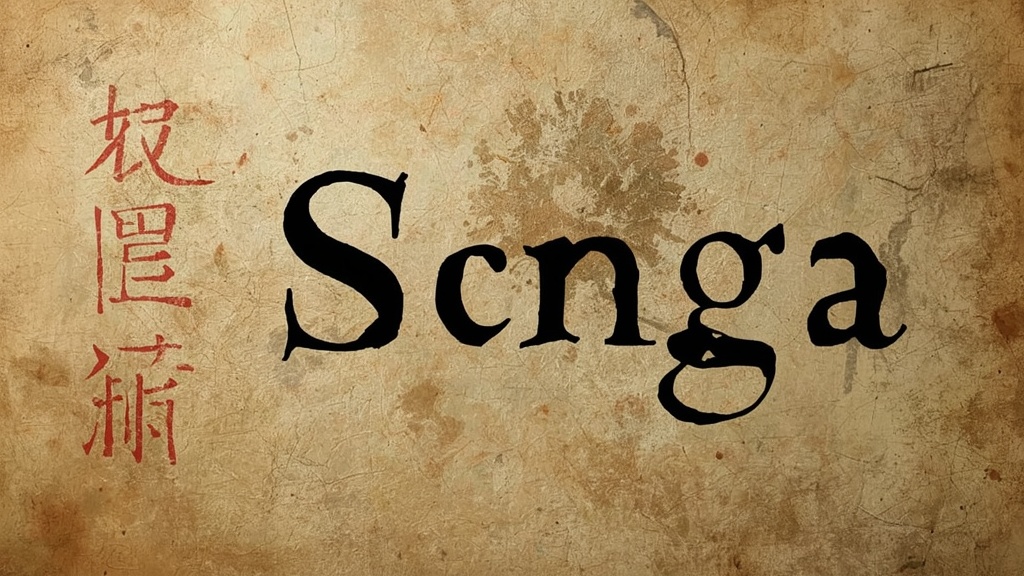
Imagine staring at 77 strange symbols. Diamonds. Curves. Geometric shapes that look like they belong on an artifact from another planet. You know they encode something. An entire Bronze Age civilization, in fact. But for 120 years, they refused to give anything up.
Then a French archaeologist noticed a repeat. And the whole thing fell open.
77 Signs, 4,000 Years of Silence
Linear Elamite is approximately 4,000 years old. It comes from the Bronze Age civilization of Elam, in what is now Iran. French archaeologists rediscovered it in 1903 at the site of Susa. Then it sat there, undeciphered, for over a century. All those diamonds and curves saying absolutely nothing to anyone.
77 signs. That's the full inventory. Not enormous, not tiny. A system expressive enough to encode real language. And yet: silence. For 120 years.
Some puzzles are stubborn like that.
The Champollion Playbook
If you know your decipherment history, you know how Jean-François Champollion cracked ancient Egyptian hieroglyphs in the early 19th century. The key was names. Royal names. Ptolemy and Cleopatra. Names are anchors because they stay recognizable across languages. You can spot them even when everything else is noise.
François Desset, a 43-year-old archaeologist based at the University of Liege in Belgium, pulled the exact same move with Linear Elamite. And it worked the same way it worked for Champollion: beautifully.
Desset had been working on this since 2006, when he first encountered Linear Elamite tablets during excavations in southern Iran. Then he gained access to the Mahboubian collection in London, owned by a family of Iranians living in exile. Ten new texts. New data for a very old puzzle.
In those texts, he found a ruler named Shilhaha, who reigned around 1950 BC. He spotted a sequence of four symbols where the last two were identical. Say "Shilhaha" out loud. Notice anything? The ending repeats. Those two identical symbols at the end of the sequence matched the repeated ending of that name.
Four symbols. One name. A 4,000-year-old lock clicked open.
Pattern Recognition Is Pattern Recognition
Here is the thing that should delight you as someone who spends time on word puzzles: the skill Desset used is the same skill you use every day. You see a repeated letter and you update your guess. You notice the structure of an ending and narrow down the possibilities. You use constraints to eliminate what can't be right until only one answer remains.
Desset did exactly that. Just with slightly higher stakes than your morning Wordle.
He has since worked on 45 inscriptions following his breakthrough. Next up: proto-Elamite tablets, described as some of the oldest written sources in the world. If Linear Elamite took 120 years to crack, here is hoping proto-Elamite is a little more cooperative.
The Repeat That Changed Everything
Four thousand years ago, someone carved Shilhaha's name into stone. Twice. With that repeated ending sitting right there in the sequence, waiting.
It waited through the Bronze Age. Through every civilization that rose and fell in the region. Through the 1903 French excavation that pulled it back into the light. Through a century of frustrated scholars.
And then Desset noticed the repeat. That's it. That's the whole story. A patient eye and a ruler's unusual name, and suddenly a dead script starts talking again.
If you've ever solved a crossword by noticing a repeated letter pattern, or nailed a Scrabble rack by spotting the double ending on a word, you understand exactly how this felt. Just imagine the grid was 4,000 years old and nobody had touched it since the Bronze Age.
Still the same game. Still the same satisfying click when the pattern gives itself up.
Source: Languagelog