One Million Greek Words Nobody Has Ever Read (Until Now)
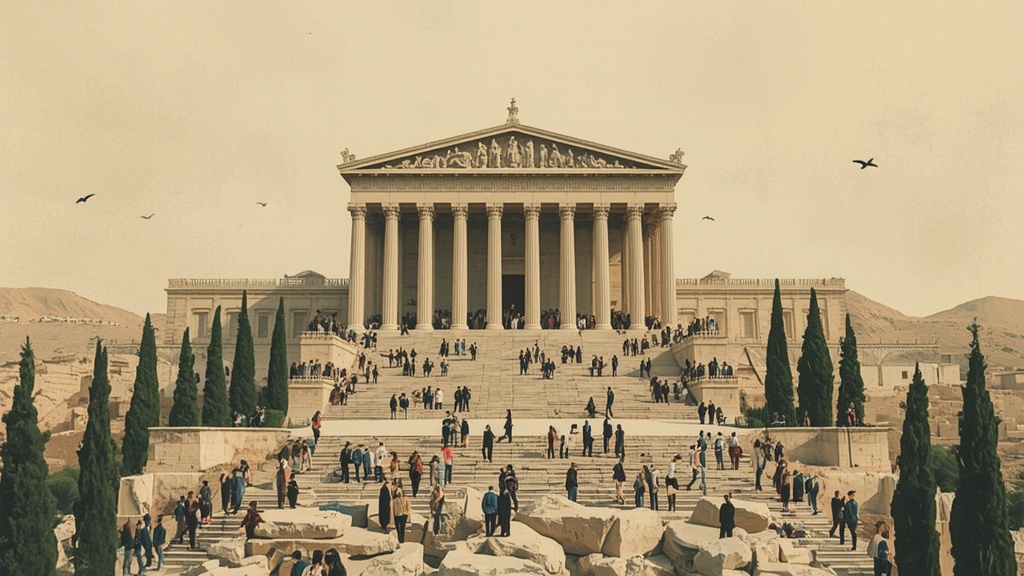
Somewhere in a library basement, there are papyri with Greek words that no human has read in two thousand years. About one million of them, actually. If that fact does not make you want to drop everything and start learning Ancient Greek, you might be in the wrong corner of the internet.
Now there is an AI working on the problem. Its name is Apollo.
What Apollo Actually Does
The Austrian Academy of Sciences, working with Mistral AI and a company called Sail Reply, built Apollo specifically for Ancient Greek. Not modern Greek. Ancient Greek. Papyri and inscriptions. The stuff that has been sitting unread in collections for centuries.
Apollo is described as the world's first advanced multimodal LLM for an ancient language. It was trained on the largest digital corpus of historical Greek assembled to date. The model can search texts and restore damaged passages automatically, doing in hours what would traditionally take years.
The project is led by Anna Dolganov, an ancient historian and papyrologist at the Austrian Archaeological Institute. She knows exactly what is at stake here.
The Scale of the Unread
Here is the number that should stop you: approximately one million Greek papyri worldwide have never been read by anyone living.
Tens of thousands of those are sitting right now in the Papyrus Collection of the Austrian National Library. Written. Stored. Waiting. The bottleneck is not access. It is time and expertise. There are only so many papyrologists in the world, and Ancient Greek papyrus transcription is not something you pick up over a weekend.
Apollo changes that math significantly.
Why Word People Should Care
You love language. That is why you are here, playing with words, memorizing obscure two-letter combinations, delighting in the fact that "muscle" comes from the Latin word for "little mouse." Ancient Greek is where enormous chunks of that inheritance live.
Medical terms. Philosophical vocabulary. The roots buried inside half the advanced words that show up in crosswords and Scrabble dictionaries. A lot of that comes from texts we already have. But one million papyri have not been read yet. One possibility is that some of those documents contain words, usages, or forms that would shift what we know about the language itself.
That is not a small thing for anyone who loves words at the root level.
Apollo Is a Name Worth Noting
The team named it after Apollo, the Greek god of light and patron of the arts and sciences. That is either a very apt choice or the best branding decision in academic AI history. Probably both.
Bringing light to documents that have sat in darkness for two thousand years. Reading words that have waited, patiently, for someone to finally show up. Apollo fits.
What This Means Going Forward
Most AI language news is about chatbots and autocomplete. This is different. This is a tool built to recover human language that would otherwise stay lost. The application is narrow and specific: Ancient Greek texts, automated restoration, faster transcription of damaged papyri.
But the implication is broader. Every word in every language has a history. Most of that history is written down somewhere. Some of it has been waiting a very long time for someone with the patience and the tools to finally read it.
Apollo just raised its hand.
Source: Languagehat