One Script, Four Descendants: The Ancient Indian Ancestor of Southeast Asian Writing
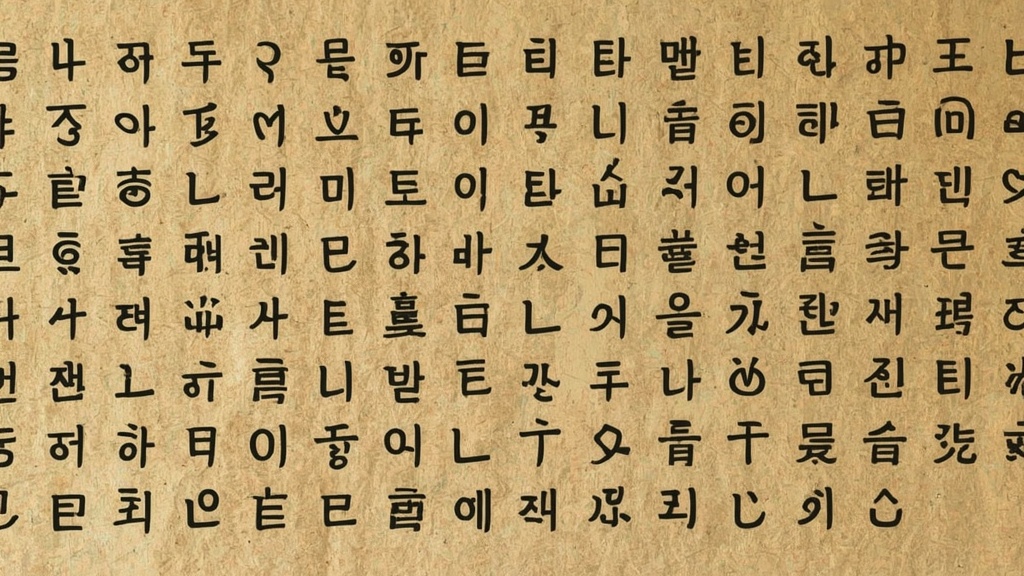
If you have ever stared at Balinese script and felt a faint sense of recognition, your instincts were right. So does Javanese. So does Khmer. And Thai writing traces back to Khmer. They are all related, and their common ancestor is a script from India that set sail across the ocean roughly fifteen centuries ago. Pull one thread and the whole fabric moves.
Meet the Root Word: Pallawa Script
The Pallawa script came from India. The oldest local writing found in Sumatra so far dates to the seventh century, written in old Malay, using Pallawa characters. Over in what is now Cambodia, the first Khmer writing also dates to the seventh century, using an adaptation of the same script.
Two different island regions. Two different languages. One shared writing ancestor. That is already a pretty good story.
But Pallawa was just getting started.
The Chain Reaction
In the eighth century, Pallawa was adapted to write old Javanese. That new system got a name: Kawi script. Kawi then became the basis for both Javanese and Balinese scripts, which people still use today. The lineage runs Pallawa to Kawi to two living writing systems. Three generations. All still active.
The Khmer branch went its own direction, but the story keeps going. Thai writing developed from Khmer script, roughly six hundred years after Khmer itself had adopted Pallawa. Six hundred years is a long time between parent and child. The family resemblance is still visible.
One Indian script. At least four living descendants. Not bad for something carved on stones in the first millennium.
Sanskrit Pulled the Same Move as Latin
Here is the detail worth memorizing for your next trivia night. Sanskrit served a priestly and official role across the region similar to Latin in medieval Europe. Formal. Prestigious. The language of religion and power.
When early writing appeared in Java, only Sanskrit words made it onto the inscriptions, not Prakrit or other common Indian speech. This is exactly how Latin worked in Europe: you might draft a legal document in Latin while speaking something entirely different at home. The written record looks more elevated than daily life ever was.
Sumatra had a slightly different story. Tamil words appeared in early writing there, not just Sanskrit. Tamil was a separate Indian language entirely, probably arriving through different networks than Sanskrit did. Same Pallawa-derived script, different vocabulary coming through the door. One island chain, two Indian linguistic influences, two different sources.
The Context These Scripts Came From
The Indian cultural world that produced these scripts was not simple. The Arthashastra, a text on statecraft written in the fourth century BCE during the Maurya empire in north India, shows how sophisticated the administrative and intellectual tradition already was. The Manusmriti, an ancient Brahman legal code, came from the same broader world. The Maurya empire was, apparently, a Jain state.
These texts and traditions did not stay home. The book that traces how all of this moved across the ocean is "Empire of the Winds: The Global Role of Asia's Great Archipelago" by Philip Bowring.
Why This Should Delight You
Scripts are where words come from. A writing system is not neutral packaging. It carries the fingerprints of whoever invented it, adapted it, and passed it on.
Every time you encounter Balinese script on a temple wall, you are looking at something that traces back through Kawi, through Pallawa, through a set of stone inscriptions in south India over a thousand years old. Every time you see Thai letters, you are looking at Khmer ancestry, which is Pallawa ancestry, which is Indian ancestry, all the way down.
Etymology tracks the history of individual words. Scripts track the history of the entire system that makes words writable. Both are rabbit holes. Both are worth falling into.
Your Scrabble tiles have a longer family history than you might think.
Source: Languagehat